Safety & service
A Safer Entry and Exit Routine for Delivery Drivers
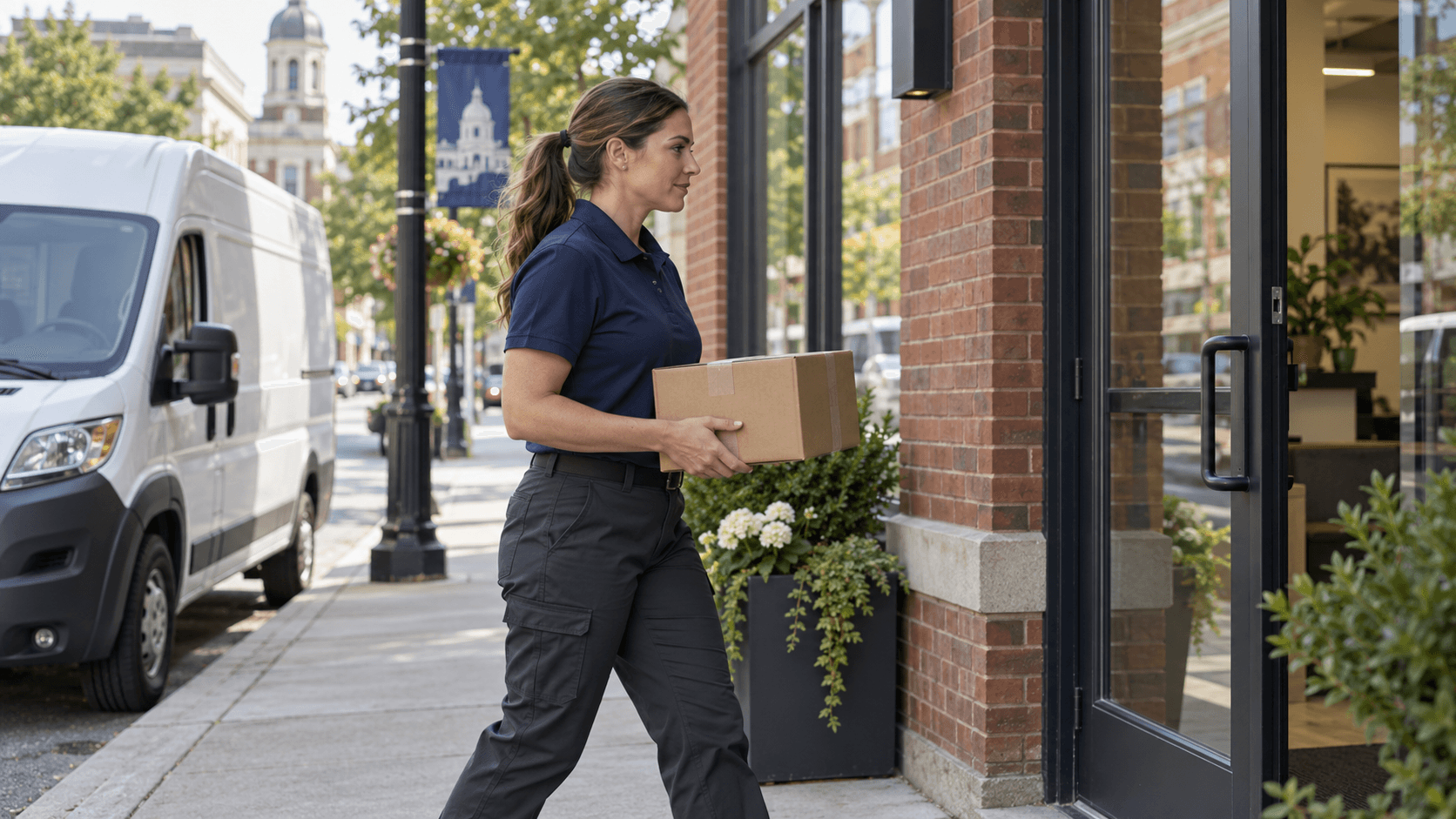
A delivery can be completed without a traffic incident and still end in an injury at the truck door. Wet steps, a loose handhold, uneven pavement, or a package carried while climbing can turn an ordinary exit into a fall. In final mile delivery, entry and exit happen repeatedly. A dependable routine protects the driver at every stop and supports the continuity of the whole operation.
Make the vehicle and landing area ready
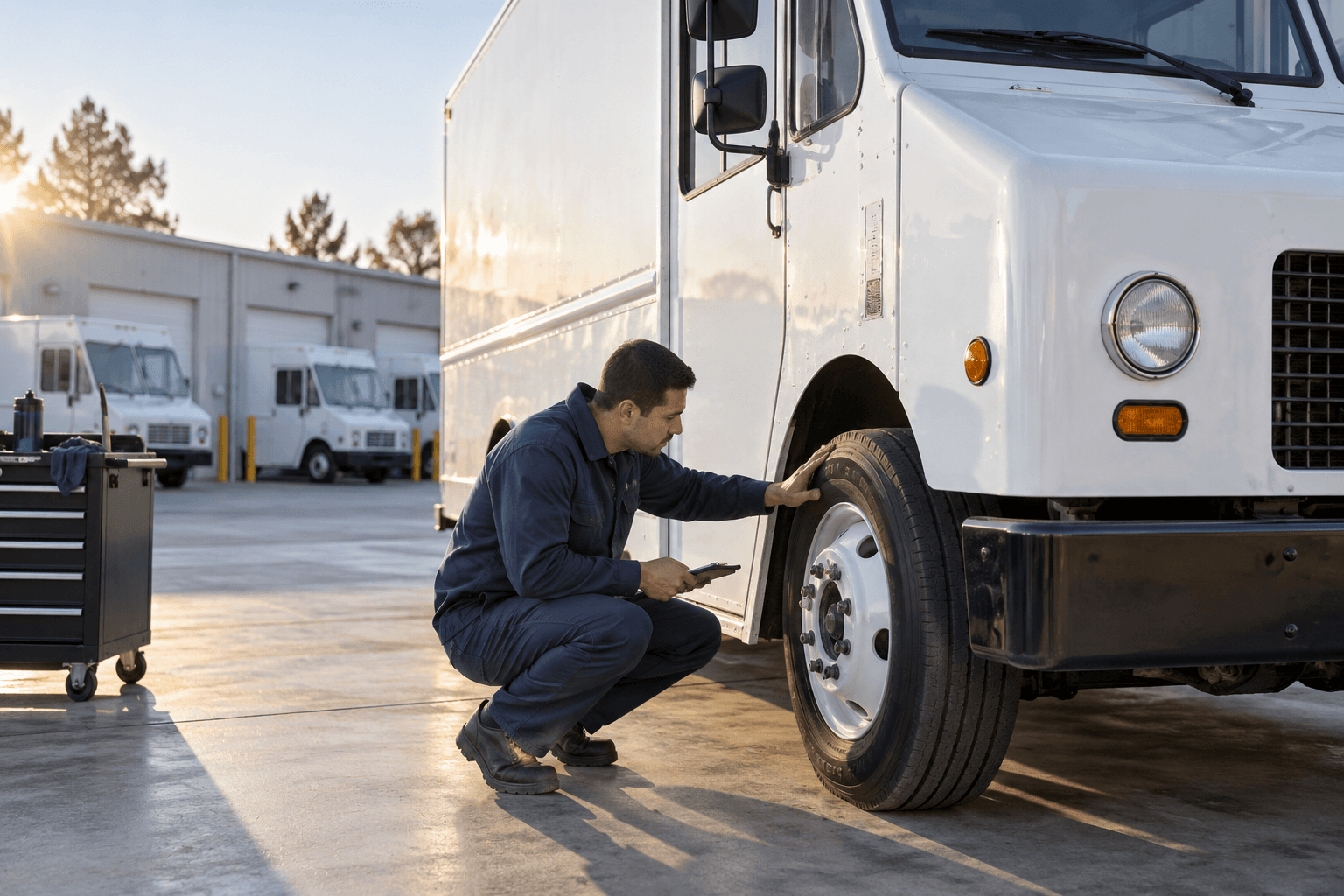
Complete the vehicle's parking and shutdown procedure before leaving the driving position. Confirm that the transmission is in the appropriate parking position and the parking brake is applied. Then look at the place where your feet will land. A curb edge, pothole, slick leaf cover, loose gravel, or ice deserves a different parking position or another safe access point.
Look for moving traffic, bicycles, and pedestrians before opening a door. The pavement beside the truck is part of the work area, not empty space reserved for the driver. If the planned exit puts you directly into a conflict, reassess the stop before opening the door or stepping down.
Use three points of contact
Use the vehicle's designated steps and fixed handholds while facing the vehicle. Maintain two hands and one foot, or two feet and one hand, in secure contact while climbing. Move one limb at a time and establish a firm hold before shifting your weight. NIOSH's truck-exit training emphasizes three points of contact and avoiding jumps from the vehicle.1
Do not treat a steering wheel, a moving door, or an unapproved surface as a substitute for a proper grab handle. Follow the vehicle manufacturer's access instructions. Keep your body close enough to the steps to remain balanced, and look before making the final movement onto the ground.
Separate climbing from carrying
A parcel in one hand and a scanner in the other leaves no reliable grip for climbing. Plan the transfer so the hands needed for the access system remain available. Use an approved holster for equipment, a suitable staging surface, or another trained handling method. Place the package where it will remain secure and will not obstruct the steps or walkway.
For large or awkward items, follow the employer's handling procedure and use the appropriate assistance or equipment. Never jump down to make an awkward carry easier. The few moments needed to organize a safe transfer are part of the delivery task, just like finding the correct address.
Treat defects and near falls as useful warnings
Inspect steps and handholds for damage, looseness, mud, and ice. Wear suitable footwear with sound soles, and clean accumulated debris before it compromises grip. OSHA identifies falls, contact injuries, and overexertion among trucking injury concerns, making access conditions a meaningful part of workplace prevention.2 Report a damaged step or handle and have the hazard addressed before continuing to rely on it.
A near fall should prompt a specific correction: different parking, a repaired tread, better housekeeping, or a change in package staging. Preventing an injury also matters to employers such as Sigma Continental because treatment expenses, lost work time, and workers' compensation claims can disrupt an entire team. No routine guarantees a lower insurance premium. The immediate measure of success is simpler: the driver reaches stable ground safely, every time.
Sources and further reading
Review current guidance and follow the training and procedures provided for your role.
- Original Safety Articles collection
- CDC NIOSH and Washington State Department of Labor and Industries — Do Not Jump Safe Ways to Exit a Truck or Trailer
- Occupational Safety and Health Administration — Trucking Industry Related Safety and Health Information