Safety & service
Preventing Hydroplaning on a Delivery Route
Rain does not need to look dramatic to change the way a delivery vehicle handles. Water can collect in a worn wheel track, across the bottom of a hill, or near a blocked drain while the surrounding road appears ordinary. For a delivery driver in Pittsburgh, the important question is not simply whether the wipers are on. It is whether the tires still have the traction needed to steer and stop through the next section of road. That assessment comes first in this Sigma Continental guide to wet-weather delivery.

Recognize the loss of road contact
Hydroplaning occurs when water separates a tire from the pavement and reduces its grip. Speed, water depth, tread condition, and tire inflation all influence the risk. There is no universal speed below which every vehicle is protected. PennDOT explains that worn tires worsen the problem and that reducing speed lowers the risk. 1
A steering wheel that suddenly feels unusually light or a vehicle that does not respond normally may indicate lost traction. The better plan is to recognize the conditions before those sensations appear. Watch for standing water, heavy spray, low areas, and drainage channels. Do not assume that a car ahead proves the water is safe for a different vehicle.
Reduce the demand on the tires
Slow before entering a wet curve or visibly pooled section, leaving enough space to do so smoothly. Increase your following distance and keep both hands ready for controlled steering. Avoid cruise control on wet roads when traction may be reduced. Tire manufacturer Bridgestone identifies speed reduction and avoiding cruise control as useful preventive measures. 2
Route timing deserves adjustment too. If rain makes every turn and approach slower, trying to recover the schedule between stops defeats the precautions taken at each stop. Tell dispatch when conditions are changing. Choose a safe alternate route when access is questionable, and never swerve abruptly into another lane to avoid a puddle. An uncertain patch of water is a reason to reassess the approach early.
Respond smoothly if grip disappears
If the vehicle begins to hydroplane, ease off the accelerator and maintain a firm, calm hold on the steering wheel. Avoid slamming the brakes or making a sudden steering correction. PennDOT advises slowing gradually and making only the steering movement needed to maintain the intended path as traction returns. 1
A harsh response can add another demand when the tires are already struggling to connect with the road. Do not jab at the controls to test whether traction has returned. Once the vehicle is stable, reduce speed further and find a safe place to reassess the route if conditions remain unsuitable. Follow the vehicle manufacturer’s guidance and your training for its braking and stability systems.
Make tire checks part of rain preparation
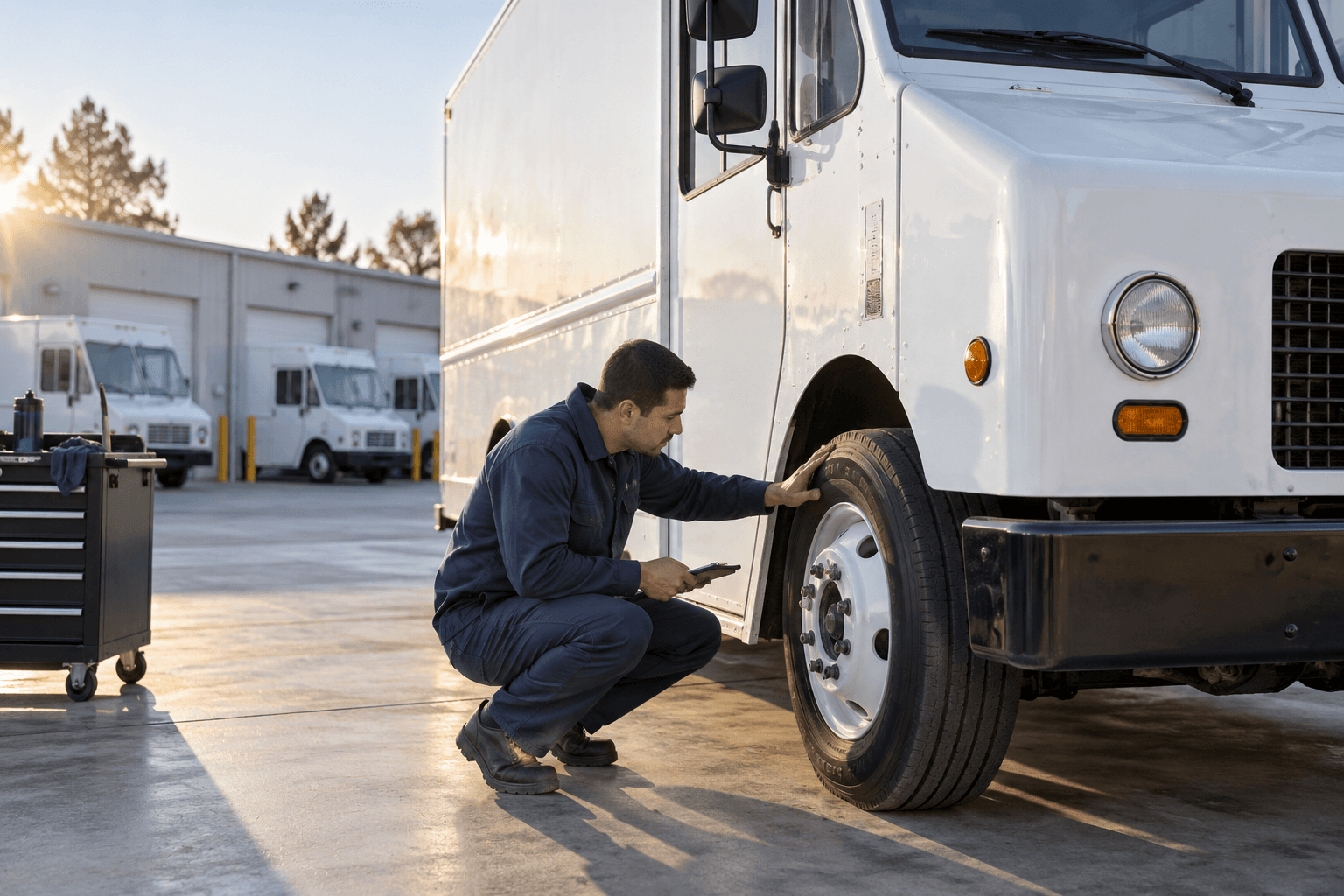
Before leaving, examine tread, tire damage, and inflation using the vehicle’s approved specifications. Tires that look acceptable from several feet away still require a proper pressure check and close inspection. Report uneven wear, recurring pressure loss, or a damaged tire before the truck is placed into service. Good tires help manage water, but they cannot guarantee grip at an unsuitable speed. 2
Consider a delivery entrance at the bottom of a hill: slowing on the approach, checking the water, and choosing another stopping location may prevent a rushed turn across a slippery surface. The most useful response to rain begins while the vehicle still feels completely under control.
Sources and further reading
Review current guidance and follow the training and procedures provided for your role.
- Original Safety Articles collection
- PennDOT Driver and Vehicle Services — Managing Speed
- Bridgestone — Hydroplaning and Preparation for Driving in Rain