Safety & service
Tire Checks That Protect a Delivery Route
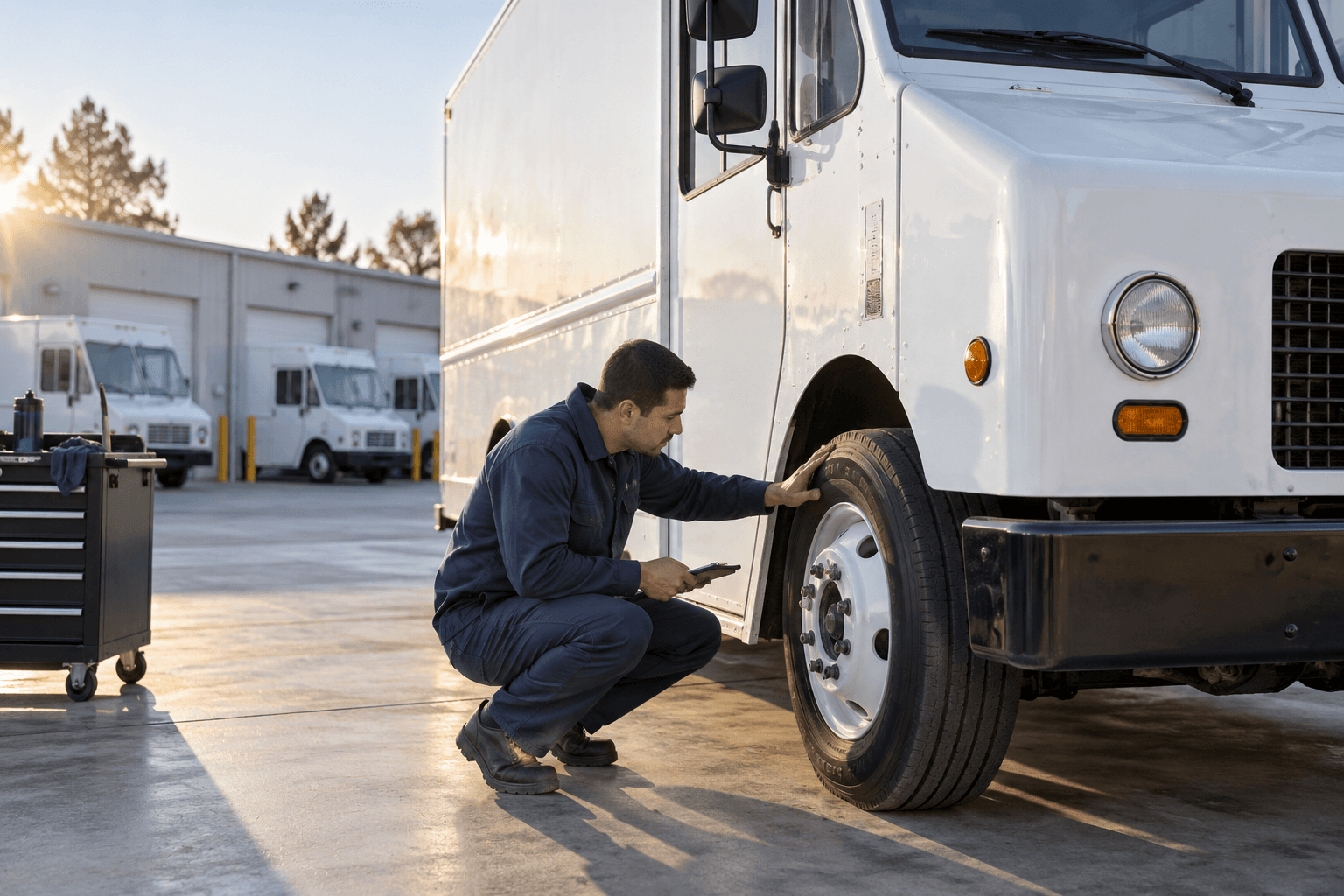
A tire can look serviceable from across the parking lot and still have low pressure, uneven tread, or damage on the side facing away from the driver. On a delivery route, repeated turns, curbside approaches, and changing loads make a careful inspection worthwhile. Sigma Continental’s tire-safety guidance focuses on checking measurable conditions and reporting changes, rather than deciding that a tire is acceptable because it has not yet gone flat.
Use the correct inflation specification
Check pressure with an appropriate gauge and follow the vehicle manufacturer’s specification and the fleet’s approved procedure for the tires and load. The maximum value printed on a tire sidewall is not automatically the recommended operating pressure for the vehicle. NHTSA advises checking pressure when tires are cold and using the vehicle’s recommended specification. 1 Front and rear requirements may differ.
Do not rely only on appearance or on a tire-pressure warning system. A warning is a reason to investigate, not a replacement for scheduled checks. Report recurring pressure loss, damaged valves, or a reading that cannot be brought within the approved specification. Avoid bleeding air from a hot tire simply to match a cold-pressure number; use the proper procedure for the conditions.
Measure tread and inspect the entire tire
For vehicles subject to 49 CFR 393.75, tires on the front wheels of a truck, truck tractor, or bus require at least 4/32 inch in a major tread groove; other tires generally require at least 2/32 inch. Measurements exclude tie bars, humps, and fillets. These are federal commercial requirements, not a universal rule for every vehicle on the road. 2
Use a tread-depth gauge at appropriate points and report uneven wear. A legal minimum is not a promise of adequate performance in every weather condition, and a fleet may require earlier replacement. Also examine tread and sidewalls for cuts, bulges, cracking, separation, or exposed material. Inspect accessible inner surfaces and dual-tire spaces according to the vehicle’s inspection procedure.
Recognize defects that require action
The federal rule prohibits operating covered vehicles on tires with exposed ply or belt material, tread or sidewall separation, a flat, or an audible leak. 2 A tire that remains inflated can still have a serious structural problem. Do not continue a route simply because a damaged tire appears to be holding air at the moment.
Communicate the tire’s location precisely, such as the right rear outer position, and describe what was observed. A clear photograph taken while safely parked may help maintenance understand visible damage. Do not crawl beneath an unsecured vehicle, strike a suspect tire, or attempt an improvised repair. Obtain qualified assistance and follow the process for keeping an unsafe vehicle out of service.
Notice changes during the route
Vibration, pulling, repeated pressure warnings, or a new sound should prompt a safe stop and assessment. After a significant curb or pothole contact, report the event and inspect as directed; damage may not be obvious from the driver’s seat. Keep attention on vehicle control while moving and investigate only after reaching an appropriate location.
Tire reporting becomes more useful when it describes a pattern. A pressure reading that falls again after adjustment or wear concentrated on one edge can give maintenance a starting point for diagnosis. The delivery driver’s role is to recognize and communicate the change. Qualified maintenance staff determine the repair or replacement needed before the truck returns to normal service.
Sources and further reading
Review current guidance and follow the training and procedures provided for your role.
- Original Safety Articles collection
- National Highway Traffic Safety Administration — Tire Safety Ratings and Awareness
- Electronic Code of Federal Regulations — 49 CFR 393.75 Tires