Safety & service
Overhead Clearance Checks for Delivery Trucks
A delivery address does not tell you whether the truck will fit. A low tree limb, restaurant canopy, or older underpass can turn an ordinary stop into a damaged vehicle and a blocked roadway. For a delivery driver, clearance planning starts before entering the space. Sigma Continental shares these checks to help drivers recognize overhead hazards while they still have room to choose another approach.
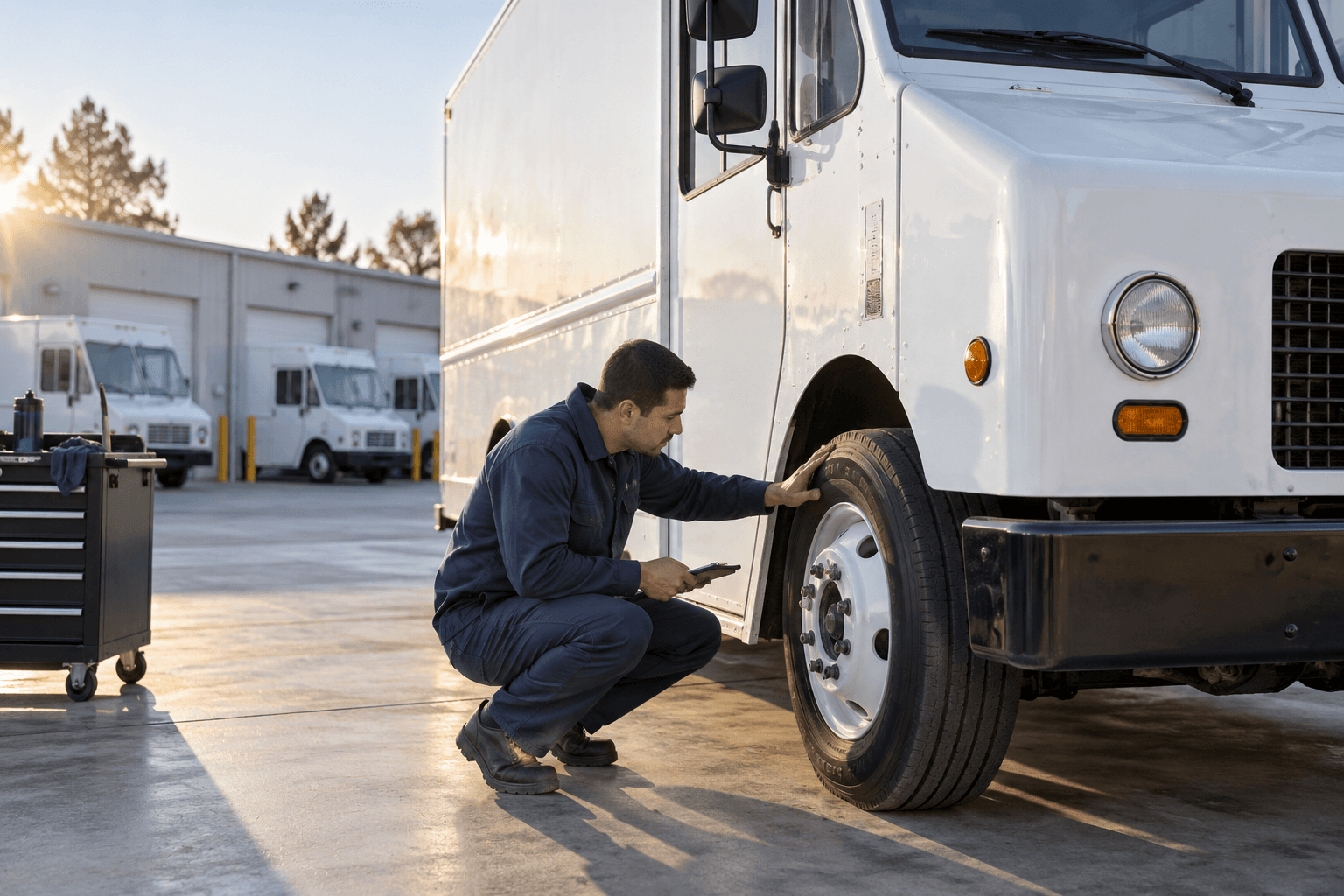
Know the height of this vehicle
Confirm the actual overall height of the assigned truck using the fleet’s verified vehicle information, including roof equipment and other fixed projections. Keep that height available in the cab. A remembered measurement from another truck is not a substitute. If a vehicle has changed, or its stated height is uncertain, ask the fleet team to verify it before using a height-restricted route.
Allow for operating conditions. Suspension movement, a sloping entrance, and changes in load can affect clearance. PennDOT’s commercial driver manual specifically warns that a cargo van may sit higher after unloading and that road resurfacing or packed snow can reduce available space below an obstruction. 1
Read the entire approach
Look for advance warning signs before reaching a bridge or restricted street. Compare posted clearance with the truck’s verified height and required operating margin; do not treat a nearly equal number as permission to try. Signs can identify a restriction without describing every edge of a curved opening or every change in the road beneath it.
At a business, scan the canopy, hanging signs, gutters, fire escapes, and any suspended fixtures. A driveway that rises sharply can change the truck’s angle as its front wheels climb. The roof may approach an obstruction before the tires reach the position where you first judged the clearance.
Check the planned departure too. A roof corner may pass beneath a canopy on a straight approach but move toward it as the truck turns to leave. Confirm the complete vehicle path, including any change in slope, before committing to the space.
Treat branches and wires differently
Tree limbs are easy to underestimate because leaves hide the solid branch behind them. Rain, snow, and wind can change their position. Do not use the truck to push vegetation aside. Stop before contact and choose a safe, authorized delivery location or ask dispatch to coordinate another arrangement.
Never attempt to lift, move, or measure a low utility line yourself. Treat an unidentified line as potentially energized. Keep clear, prevent others from approaching when you can do so safely, and report the hazard through emergency or utility channels appropriate to the situation. 3 A familiar driveway is not proof that today’s overhead conditions are unchanged.
Stop before the decision becomes a recovery
If you cannot verify clearance from a safe position, remain outside the restricted area. A slow impact is still an impact; creeping beneath an uncertain obstruction does not establish that the truck fits. Avoid stopping where you create another immediate traffic hazard, and obtain assistance with traffic control or an alternate route when necessary.
Commercial vehicle route planning should account for vehicle dimensions and restrictions. 2 Navigation is useful, but the driver must still respond to actual signs and conditions. Record the verified restriction and usable alternative through the company’s approved process so the next driver does not repeat the same discovery. A successful stop includes getting the truck safely out again.
Sources and further reading
Review current guidance and follow the training and procedures provided for your role.
- Original Safety Articles collection
- PennDOT — Commercial Driver Manual Section 2 Driving Safely
- FMCSA — Tips for Truck and Bus Drivers
- OSHA — Electrical Safety QuickCard