Safety & service
Reducing Night Driving Risks on Delivery Routes
The last stops of a route can require more judgment than the first. House numbers disappear into shadows, headlights reflect from wet pavement, and a pedestrian may blend into the background. Night driving safety depends on admitting that the scene contains information you cannot yet see. Slowing down and improving the view give a delivery driver time to make that information useful. Sigma Continental’s night driving guidance starts with that visibility problem.
Prepare the vehicle before darkness
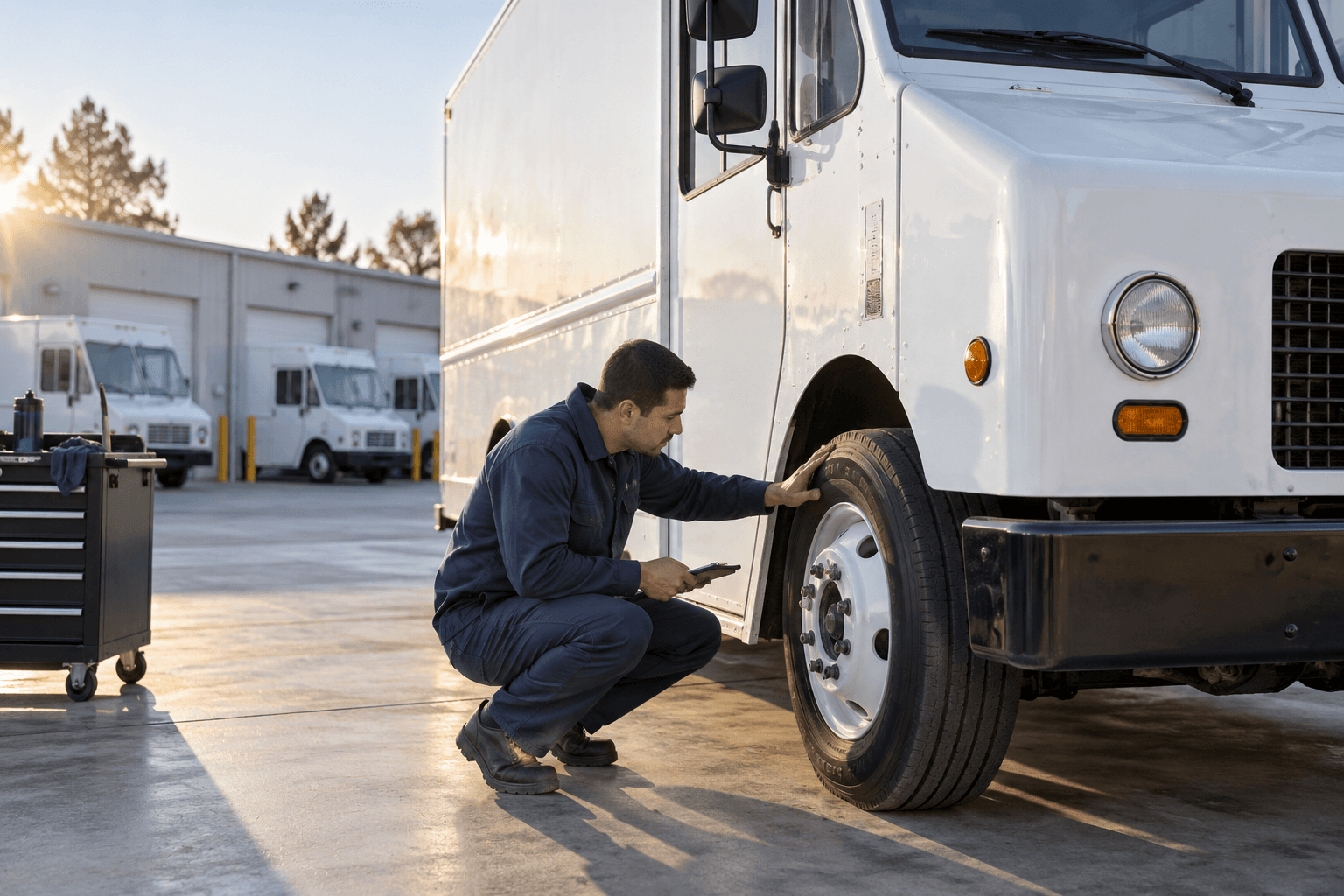
Check headlights, brake lights, turn signals, markers, and reflectors before the route. Clean the windshield inside and outside, and clean mirrors and camera lenses. A smear that seems minor during daylight can scatter an approaching headlight across the view. Report damaged or poorly aimed lighting instead of compensating by driving with inappropriate beams.
Adjust the seat and mirrors for a complete view, and set instrument brightness so you can read essential information without unnecessary glare. Keep the cab organized. Searching for a scanner or delivery note in a dim vehicle is a distraction that preparation can prevent. 1
If the route begins in daylight and ends after sunset, prepare for both conditions. Carry the equipment needed for the dark portion and identify delivery locations where limited lighting may require a different parking approach.
Keep stopping distance within sight
Choose a speed that allows the truck to stop within the distance you can see clearly. That distance may be much shorter on an unlit bend, over a crest, or through rain. The posted speed limit does not guarantee sufficient visibility for a loaded delivery vehicle. 1
Use high beams only when appropriate and legal, and dim them for other road users. Avoid staring into approaching lights. Maintain your lane reference while looking toward the usable portion of the road ahead. If glare temporarily prevents a safe view, reduce speed smoothly rather than continuing on the assumption that the lane is empty.
Expect people where the light is poor
Scan beyond the center of the lane. A person leaving a bus, a jogger near the shoulder, or a child crossing between parked vehicles can emerge from a dark area. Pay particular attention when turning across sidewalks or passing a vehicle that has stopped near a crossing. NHTSA advises extra caution when visibility is poor and when backing. 2
At the delivery address, choose a lawful parking position that supports a safe exit and a visible walking route. Use a flashlight to inspect footing after securing the truck; do not direct the beam into traffic. If the address cannot be confirmed safely, stop and resolve the uncertainty rather than creeping along while repeatedly studying a screen.
Recognize when the driver needs a stop
Heavy eyelids, missed signs, drifting attention, or difficulty recalling the last stretch of road mean the task is becoming unsafe. A loud radio, cold air, or another phone call is not a dependable solution. Park in an appropriate safe location and notify dispatch if fatigue prevents continued driving. 3
Night delivery requires honest decisions about visibility and workload. A delayed stop can be rescheduled; a poorly judged move cannot be taken back. Before moving away from each address, pause long enough to scan around the truck again. Someone may have entered the dark area beside it while the package was being delivered.
Sources and further reading
Review current guidance and follow the training and procedures provided for your role.
- Original Safety Articles collection
- PennDOT — Commercial Driver Manual Section 2 Driving Safely
- NHTSA — Pedestrian Safety
- NHTSA — Drowsy Driving